


What 2025 Taught Me About Seeing More and Doing Less

Reflections on a year of slower travel, deeper connection, and why experiences matter more than ever
As photographers, it is easy to measure a year by distance traveled, images created, or projects completed. For a long time, I did exactly that. But 2025 gently, and sometimes firmly, asked me to rethink those metrics.
After spending roughly 220 days on the road in 2024, I made a conscious decision to slow my pace this year, logging about 165 days of travel. On paper, it is still a lot of movement. In practice, it felt entirely different.

What surprised me most was not that I photographed less. It was that I photographed with more intention. I felt more present in familiar places, more thoughtful in new ones, and more grounded in why I do this work at all. That shift shaped not only my images, but the experiences I helped create for the people who joined me in the field.
Returning to Familiar Places and Letting Experience Lead
Many of my travels in 2025 were not to new destinations, but back to places I have come to know deeply over time, including Japan, Costa Rica, and Caddo Lake, Texas. These are landscapes I have revisited year after year and each return feels less like an arrival and more like reconnecting with an old friend.


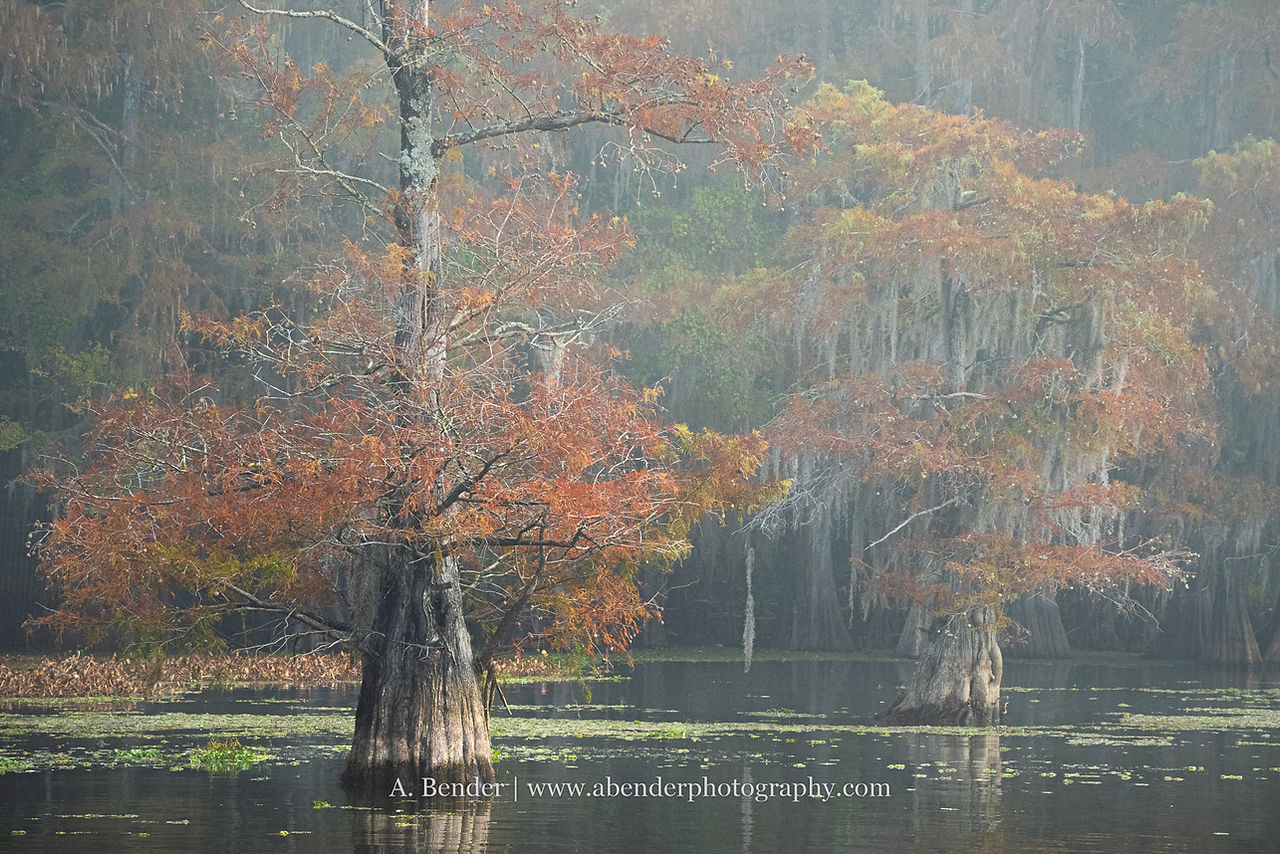
There is a quiet strength in familiarity. When you understand the rhythms of a place, the light, the weather patterns, and the seasonal behaviors, the mental energy once spent navigating the unknown begins to fall away. Logistics become second nature. The environment feels less like something to conquer and more like something to listen to.
That familiarity creates space. For me, it allows more attention to be given to the people traveling with me, ensuring their experience in the field is thoughtful, supportive, and unhurried. It also changes how I photograph. Instead of feeling compelled to document everything because it is new and exciting, I am able to slow down, make fewer frames, and focus on creative choices rather than coverage.

New places, of course, still bring a rush of excitement. When I visited Botswana for the first time this year, I felt that familiar surge of urgency that comes with encountering a landscape entirely unlike anything you have experienced before. The instinct to photograph everything before it slips away is deeply human.
But over years of travel, scouting, and teaching, I have learned something essential. Photographic restraint is learned, not innate. It takes intention and practice, especially in unfamiliar environments. One of the most effective ways to cultivate that restraint is to give yourself more time. Additional days allow the initial sensory overload to soften. Once that urgency fades, creativity has room to deepen, and images begin to feel less reactive and more personal.
Seeing Beyond the Obvious When Conditions Are Not Ideal
Some of the most meaningful photographic lessons this year came from places that do not immediately look spectacular. They came from environments that asked for patience rather than enthusiasm.
Autumn along the Dalton Highway in northern Alaska is a perfect example. At first glance, it can feel gray and dreary, with rain-soaked days, heavy skies, and subdued light. It is easy to assume those conditions are working against you and that stronger images will have to wait for better weather.

But if you stay present, a different story begins to emerge. Rain saturates fall color in ways clear skies never could. Low clouds add depth and mood to the landscape. Brief breaks in the weather reveal fleeting rainbows that reward patience rather than persistence.
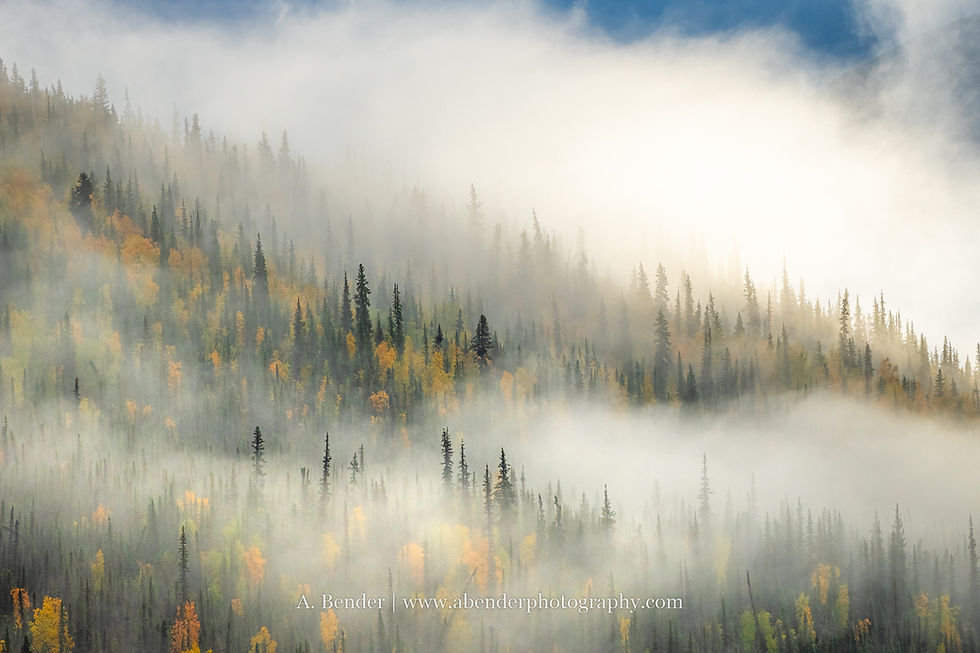
Moments like these reinforce an important truth. Strong images rarely come from ideal conditions. They come from responding thoughtfully to what is actually in front of you. Learning to see beyond the obvious takes time and experience, not new equipment.
This is where many photographers turn toward gear as a solution. While tools matter, they are rarely the primary limitation. Unless you can clearly define a specific deficiency, such as wanting to photograph brown bears while only owning a 35–70mm lens, growth is far more likely to come from deeper familiarity with the gear you already have.
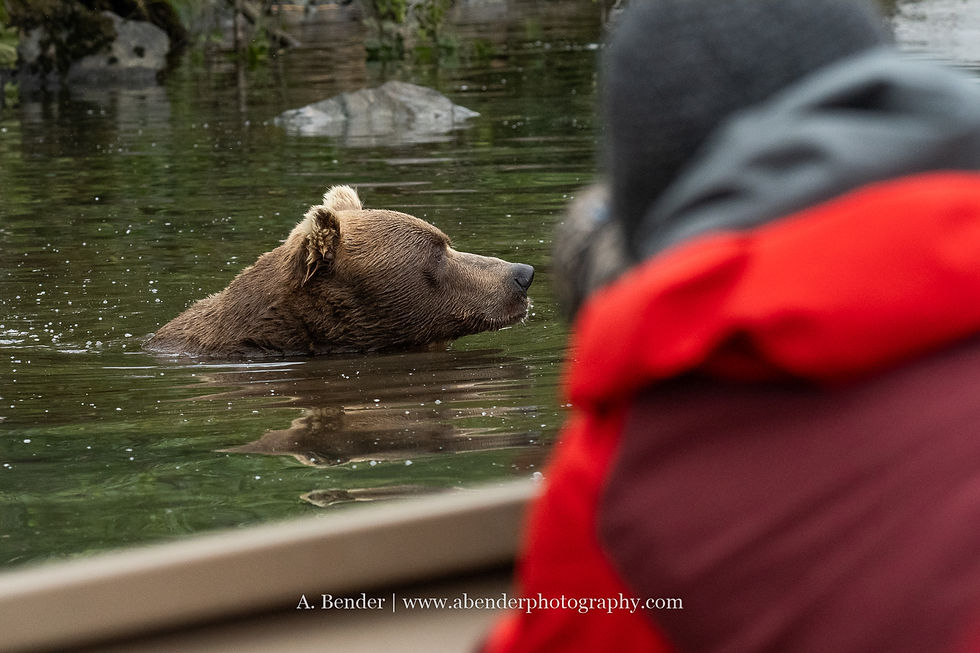
Time behind the lens builds instinct. Field experience teaches adaptability. Education helps you recognize opportunities that might otherwise go unnoticed. In most cases, investing in experience will return far more value than acquiring another piece of equipment that cannot replace seeing.
Being Selective About Experiences and Why Group Size Matters
Intentional photography extends beyond how and what we shoot. It also shapes how we choose to learn and who we choose to learn alongside.
A group of ten participants may sound small if you are accustomed to large-scale travel experiences. In wildlife photography, however, even a group of ten can feel large, both for the people holding cameras and for the subjects being photographed.
This is why I am consistently drawn to smaller, micro-group experiences, often limited to three to five participants. In groups this size, I am able to give far more individual attention, tailoring guidance to where each person is in their photographic journey rather than teaching only to the middle of the group.

Smaller groups create meaningful advantages in the field. Everyone has more time at each opportunity. Movement is quieter and more deliberate. This greatly increases the chances of photographing timid or easily disturbed subjects, which often disappear quickly when pressure builds. Fewer people also means fewer competing angles and less urgency, allowing each participant the space to slow down and work through a scene intentionally.

Equally important, small groups offer flexibility. While a well-crafted itinerary provides structure, some of the most memorable moments in the field are unplanned. When a group is small, it becomes much easier to pivot based on light, behavior, weather, or individual interests. If one participant wants to focus on behavior while another is drawn to composition or abstraction, there is room to support both without compromise.
Learning in this environment feels less rushed and more conversational. Questions come naturally. Experimentation is encouraged. Mistakes become part of the process rather than something to move past quickly. The experience shifts from simply following a schedule to engaging deeply with place, subject, and craft.
Choosing smaller group experiences is not about exclusivity. It is about creating space for thoughtful learning, ethical wildlife practices, and the freedom to meet each participant where they are. In my experience, that is where confidence grows and where the most meaningful images often begin.
Community, Connection, and the Places That Welcome Us Back
As much as I travel, 2025 reminded me that environments are only part of the story. The connections we build with people shape our experiences just as deeply as the environments we photograph.

Returning to places like Costa Rica or the Azores, where I am greeted with familiar faces and warm smiles, brings a sense of grounding that is hard to put into words. That feeling of being welcomed back matters, especially when life is lived largely out of a suitcase.

Even in Botswana, a place entirely new to me, that warmth was immediate. From the moment I arrived to settling into remote bush camps, care and hospitality were woven into every interaction. Feeling at home, even briefly, creates space for trust and curiosity, which in turn allows learning to happen more naturally.

This sense of connection is something I strive to pass on to those who travel with me. When participants feel supported, encouraged, and respected, the learning environment changes. Questions come more freely. Mistakes feel safe. Growth happens without pressure.
Photography, at its best, is not just about images. It is about relationships with place, people, and process. This year made that truth especially clear.
Learning Goes Both Ways Through Shared Curiosity
Teaching in the field has continually reminded me that learning is never one-directional. This year, my clients taught me just as much as I taught them.
Sometimes that meant finding new ways to explain familiar concepts. I might approach a solution through one path, while someone else arrives there through a completely different route. Adjusting how I teach in those moments deepens my own understanding of the craft.

Other times, it meant seeing locations I have photographed for years through fresh eyes. Watching someone experience a place for the first time can reopen creative doors that routine quietly closes. Their curiosity becomes contagious, expanding how I see and respond to the landscape.
Not going to lie, if Gary had not gone out and taken test shots that proved without a doubt the northern lights could be seen over Caddo Lake this year while we were there, I was totally going to pass it up as I typically don't do night photography. However, without his test shots and a bit of a push, this and several other Night on Caddo images would not be in my collection. The image on the Left is the final image while the one on the Right is a jpeg of the RAW to show how little I had to do to this image. Tamron 25-200mm | f/3.5 | 10 sec | ISO 5000 | Benro Tripod
In an increasingly divided world, shared curiosity is a powerful connector. Photography brings together people from vastly different backgrounds and gives them common ground. Through observation and discovery, differences fade and shared purpose takes shape.
That sense of community, both local and global, remains one of the most meaningful aspects of this work and one of the reasons I continue to return to the field year after year.
Carrying These Lessons Forward into 2026
If 2025 reinforced anything, it is this. Photography is a practice, not a destination.
Growth does not require constant movement or ever-expanding gear lists. It requires intention, patience, and a willingness to learn wherever you are. Whether that happens in your backyard, close to home, or halfway around the world, the opportunity is always present.

Some of the most meaningful progress happens when we step outside routine and into shared experience. When we give ourselves time, slow down enough to see clearly, and allow learning to unfold naturally.
As the year comes to a close, I am carrying forward a quieter approach. Fewer frames. Deeper connections. A renewed belief that education and experience will always outlast accumulation.
That feels like a solid foundation for whatever comes next.
For those interested, here is a brief gallery of what I am currently considering my Top 12 Images of 2025 based on what I have currently edited and personal preference at this moment. They span from Japan to Botswana, Florida to Alaska, the Galapagos to the Azores. Techniques used include infrared, wide-angle, long exposure, use of supplemental lighting, high ISO, macro lenses, telephoto, and one image was even taken with my GoPro13 underwater.
Wherever you are and whatever gear you have, may you stay inspired to keep creating and telling your story.
Note: These are not in any particular order.


Comments