


Spring Migration Photography: How to Plan Shoots Around Movement, Weather, and Timing


Each spring, the woods, wetlands, shorelines, and thickets begin to shift. What felt still a week ago is suddenly threaded with song, movement, and brief flashes of color. One morning a favorite trail seems empty. The next, it is full of movement. Spring migration offers some of the best bird photography of the year, but it can also be one of the most inconsistent seasons if you approach it without a plan. That unpredictability is part of migration, but it does not mean the season is random.
For photographers, spring migration can feel equal parts exhilarating and chaotic. It is easy to approach that unpredictability like a scavenger hunt—to chase reports, refresh sightings, and hope to be in the right place at the right time. Sometimes that works. More often, it leaves you reacting rather than observing.
Birds migrating north in spring are following patterns shaped by weather, habitat, food availability, geography, and energy needs. They stop where they can rest, refuel, and find shelter before continuing on, which is why strong migration photography usually comes from understanding conditions rather than simply chasing sightings. The strongest work comes from learning to read the season instead of reacting to it—understanding how weather influences movement, why some habitats briefly fill with life while others remain productive throughout the season, and how birds use a landscape when they are tired, feeding hard, and continuing north. The more you understand those rhythms, the less migration feels random.
That shift matters, especially for the intermediate or advanced nature photographer. At a certain point, a record shot is no longer enough. You want stronger light, cleaner backgrounds, more natural behavior, and photographs with shape, atmosphere, and intention—images that feel grounded in season and place. Migration offers all of that, but only if you do the homework to understand both subject and environment, then slow down in the field and work with what the birds and landscape are already giving you.

Migration Is Pattern-Based, Not Random
Migrants do not just “show up.” They move through landscapes in response to specific needs. Weather, food availability, habitat, geography, and energy demands all shape how and where birds travel in spring. In North America, those movements are broadly organized through four major flyway systems: the Atlantic, Mississippi, Central, and Pacific Flyways. These are not narrow aerial highways so much as broad movement corridors spread across the continent, which is why migration is not limited to famous refuges, coastlines, or bottlenecks. In practical terms, nearly all Americans live within or adjacent to one of these flyway systems, and migrating birds likely cross every square mile of land and water in North America.
Birds moving north need food after overnight flights. They need cover when conditions are poor. They need protected stopover habitat where they can rest without spending unnecessary energy. That is why small woodlots, brushy edges, wetlands, flowering shrubs, sheltered shorelines, and areas with fresh insect activity can all concentrate birds. A place that seems quiet most of the year may suddenly become productive if it offers food, cover, and protection during a movement window.
For photographers, this is where migration becomes more readable. Stronger images usually come from understanding those conditions rather than simply chasing sightings. The strongest work comes from learning to read the season instead of reacting to it—understanding how weather influences movement, why some habitats briefly fill with life while others remain productive throughout the season, and how birds use a landscape when they are tired, feeding hard, and continuing north.
This is also why chasing a species list is not always the best photographic strategy. A reported bird may draw attention, but understanding why birds are using a habitat will usually lead to better field decisions and better images. Instead of asking only what species were seen, it is more useful to ask:
What resources does this habitat provide right now?
Is it sheltered from wind?
Is there fresh growth, flowering, or insect activity?
Does it offer layered vegetation for cover and feeding?
When you start thinking this way, migration becomes easier to read.

Learn to Use Weather as a Field Tool
Weather is not just something to work around. In migration, it helps explain movement.
You do not need advanced weather knowledge, but you do need to pay attention to a few patterns:
Wind direction: Favorable tailwinds can support overnight movement. Strong opposing winds may reduce movement or cause birds to stop.
Rain: Overnight or early morning rain can ground migrants and concentrate them in available habitat.
Cloud cover: Overcast skies often create softer light and may keep birds active longer in exposed areas.
Cold fronts and warm fronts: These can influence timing and intensity of movement, especially when combined with wind shifts.
Calm conditions after unsettled weather: These mornings can be especially productive.
For photographers, weather affects both bird behavior and image quality. Soft overcast light often helps preserve feather detail and reduces harsh contrast. Light mist or moisture can add atmosphere without overpowering the scene. Heavy wind, on the other hand, often makes bird movement less predictable and creates more autofocus challenges in branches and foliage.
Before heading out, ask two questions:
How might this weather affect bird movement?
How might it affect the quality of the light and the usability of the habitat?
That simple shift makes weather part of your planning rather than just part of the background.
Timing Is Part of the Fieldcraft
One of the easiest ways to improve your migration photography is to take timing more seriously.
Migration does not happen as one smooth seasonal sweep. It comes in waves. Species move at different times, and the pace of movement shifts with conditions. A place that feels quiet one morning can feel entirely different the next. That is part of what makes spring so compelling, but it is also why timing matters so much.
At the broad seasonal level, timing shapes what is even possible. Early spring often carries waterfowl, blackbirds, raptors, and the first returning songbirds. As the season advances, diversity builds. More insectivores arrive. Color increases. Vocal activity increases. Territorial behavior starts to creep in. If you know roughly where your area sits within that progression based on positioning within/adjacent a flyway, you begin going into the field with more realistic expectations.
At the daily level, timing matters just as much. Early mornings are often especially productive during migration, particularly after a night of movement. Birds that came in overnight need to feed. They are active, visible, and often working lower and more openly than they might later in the day. By late morning, especially under bright sun or rising wind, activity can change quickly.
That does not mean every worthwhile image happens at dawn. It does mean that if you want better odds, it helps to align your time in the field with the behavior you hope to photograph.
Migration rewards photographers who understand that timing is not separate from craft. It is part of it.

Prioritize Habitat Over Reported Birds
A reported bird can be useful information, but habitat is what consistently produces opportunities.
During migration, birds use areas that provide some combination of food, cover, water, and shelter. The most productive locations are often not the most famous ones. They are the places where birds can meet immediate needs with minimal energy expenditure.
When evaluating habitat, think first about why birds are using it. Is there shelter from wind? Fresh insect activity? Flowering or leafing vegetation? Shallow water? Dense cover nearby with open feeding edges? Birds are often drawn to places where they can feed efficiently while staying close to protection.
At the same time, photographers need to evaluate whether that habitat will actually produce workable images. A location may hold birds consistently, but if every perch is buried in clutter or every angle puts a branch directly behind the subject, it may be better for observation than photography.
A productive migration habitat often includes:
edges between two habitat types
protected pockets out of the wind
early leaf-out or flowering vegetation
shallow water or wet margins
perch variety at different heights
enough openness to allow clean sightlines
It also helps to look for habitat that meets photographic needs:
perches with some distance from the background, which helps soften foliage and reduce visual clutter
small shooting lanes into dense brush, where birds may briefly appear in a usable opening
natural gaps at the edge of cover where birds move between feeding and shelter
areas where you can work at eye level or slightly below the subject
perches that receive clean light at useful times of day
Light is part of habitat evaluation too. As you work a location, pay attention to when certain perches or edges are lit well. One area may have the best front light in the morning and become too harsh later. Another may be stronger in the afternoon when backlight or side light begins to separate the subject from the background. If you notice those patterns ahead of time, you can return when the habitat is working for both the bird and the photograph.
This is one of the most useful mindset shifts for intermediate photographers: do not just look for birds. Look for places where birds are likely to behave naturally, where the setting supports the image, and where light, background, and access come together well enough to give you options.

Work a Local Patch
One of the most effective ways to improve migration photography is to revisit the same locations throughout the season.
A local patch does not need to be a well-known hotspot. A refuge trail, pond edge, marsh, creek corridor, or small neighborhood park can be just as valuable if it can be observed repeatedly over time. That repetition reveals how the location functions during migration rather than just what happened there on a single visit.
With familiarity, useful patterns start to emerge. Certain edges may hold activity better in particular wind directions. Some perches may only receive clean light for a short period in the morning. A sheltered pocket that seems quiet most days may become productive after overnight rain or a front. These details are easy to miss on a first visit, but they often make the difference between simply finding birds and making stronger photographs.
Repeated visits also help identify where bird needs and photographer needs overlap. Some areas consistently hold activity but offer poor sightlines, cluttered backgrounds, or difficult light. Others may be less obvious at first, yet provide cleaner perches, better shooting lanes, and more usable seasonal context. Over time, it becomes easier to recognize which parts of a patch are worth returning to under specific conditions.
Learning one place well builds stronger field sense. It sharpens awareness of timing, habitat change, and behavior, and that usually leads to more deliberate work in the field. During migration, consistency in place often produces better photographic results than constantly reacting to reports elsewhere.

Observe First, Then Build the Image
Migration can make photographers rush. Birds may only be visible for a short window, and the instinct is often to raise the camera immediately and start shooting. But stronger photographs usually come from slowing down just enough to observe first.
That observation is practical. A migrant may be feeding in a loop, returning to the same perch, or briefly appearing in one clean opening before dropping back into cover. Once that pattern becomes clear, it is easier to anticipate the next opportunity rather than react late to it. This is often where the shift happens from making record shots to making more intentional images.
Before pressing the shutter, it helps to quickly evaluate a few things at once: whether the background is clean enough to support the subject, whether the perch adds or distracts, whether the light is workable, and whether the bird is relaxed enough to continue behaving naturally. A visible bird is not always a photograph worth making. Bright gaps, intersecting branches, cluttered perches, or harsh light can weaken an otherwise good encounter. In many cases, a brief pause or small change in position is enough to improve the frame.
Behavior often makes the strongest difference. A feeding pass, a stretch, a wing flick, a pause in good light, or a brief song posture usually creates a more compelling image than a static side profile. Migration is an active season, and the photographs that hold attention often reflect that.
Observation also works as an ethical check. If a bird is repeatedly shifting away, interrupting feeding, or dropping into cover because of a photographer’s presence, then the approach needs to change. Stronger wildlife photography usually comes when birds are able to continue behaving naturally.
During migration, a full card does not always mean strong results. More often, the better images come from fewer frames made with more intention.

Let Spring Show
Not every migration image needs to be tightly framed. Often, the stronger photograph is the one that leaves enough room to show season, habitat, and atmosphere.
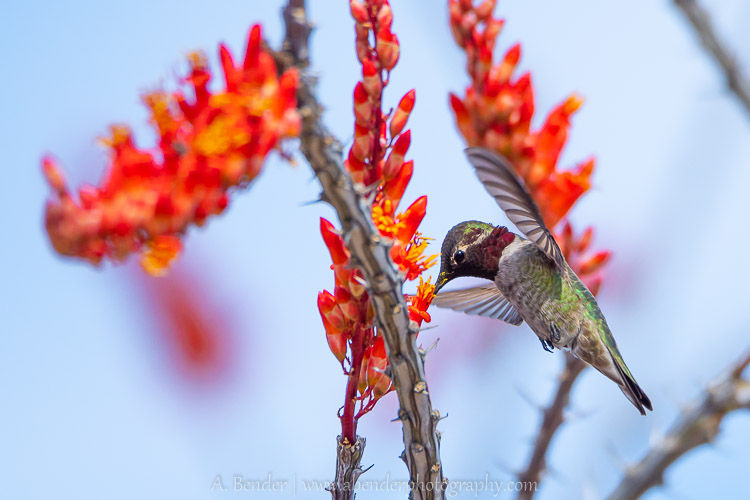
Fresh leaves, buds, blossoms, catkins, wet bark, reflections, and soft spring light can all give an image a clearer sense of place. Used well, these elements help explain both the season and the bird’s relationship to the habitat. The goal is not to add clutter, but to include context that supports the subject.
For growing photographers, this is an important shift. A tight portrait is not always the strongest answer. In many cases, the better image is the one that shows the bird as part of a living spring landscape rather than separating it from it.

Ethics Matter More, Not Less, in Migration
Ethics matter throughout the year, but migration brings added pressure. Birds are traveling, refueling, and managing energy carefully, so even small disturbances can have a cost.
A bird that looks tolerant is not necessarily unaffected. If feeding stops, the bird begins watching the photographer instead of its surroundings, shifts repeatedly away, or drops into cover more often than it otherwise would, the approach is already influencing behavior. That is the point to stop, back off, or move on.
During migration, the goal should be to work around natural behavior rather than disrupt it. That means giving birds space, avoiding repeated approaches, and not blocking access to food, water, or cover. It also means resisting the urge to flush a bird for a flight shot or press closer just because the subject has not fully left yet.
Hotspots need extra care as well. When several photographers are focused on one bird, pressure can build quickly even if each person feels they are acting reasonably. In those situations, it helps to pay attention not just to personal distance, but to the cumulative effect on the bird.
Playback deserves caution too. In most recreational photography situations, calling birds in for a better look or cleaner frame is hard to justify. Migration is already a demanding period, and added stress for the sake of an image is not a good trade.
A useful standard in the field is simple: if the bird changes its behavior because of the photographer’s presence, the photographer needs to change theirs. That approach is better for the bird, and it usually leads to more natural opportunities and stronger images as well.

Putting It Into Practice
Spring migration offers plenty of excitement, but strong photography during this season usually comes from preparation as much as opportunity. Knowing when movement is likely, recognizing productive habitat, watching how birds are using a space, and understanding where light and background will work best all help turn a brief encounter into a stronger image.
That is also where the difference often shows between simply finding birds and photographing them well. A good migration image is rarely the result of one factor alone. More often, it comes from several things lining up at once: a bird using the right habitat, workable light, a clean perch or shooting lane, and an approach that allows natural behavior to continue.
The more those patterns are studied, the more readable migration becomes. And when that happens, photography tends to become less reactive, more deliberate, and far more consistent from one season to the next.


Comments